Cape Town water supply disruptions happen every week, sometimes planned, sometimes not. Understanding why your tap goes dry, and how to know when it will come back, starts with understanding how the water gets to your tap in the first place.
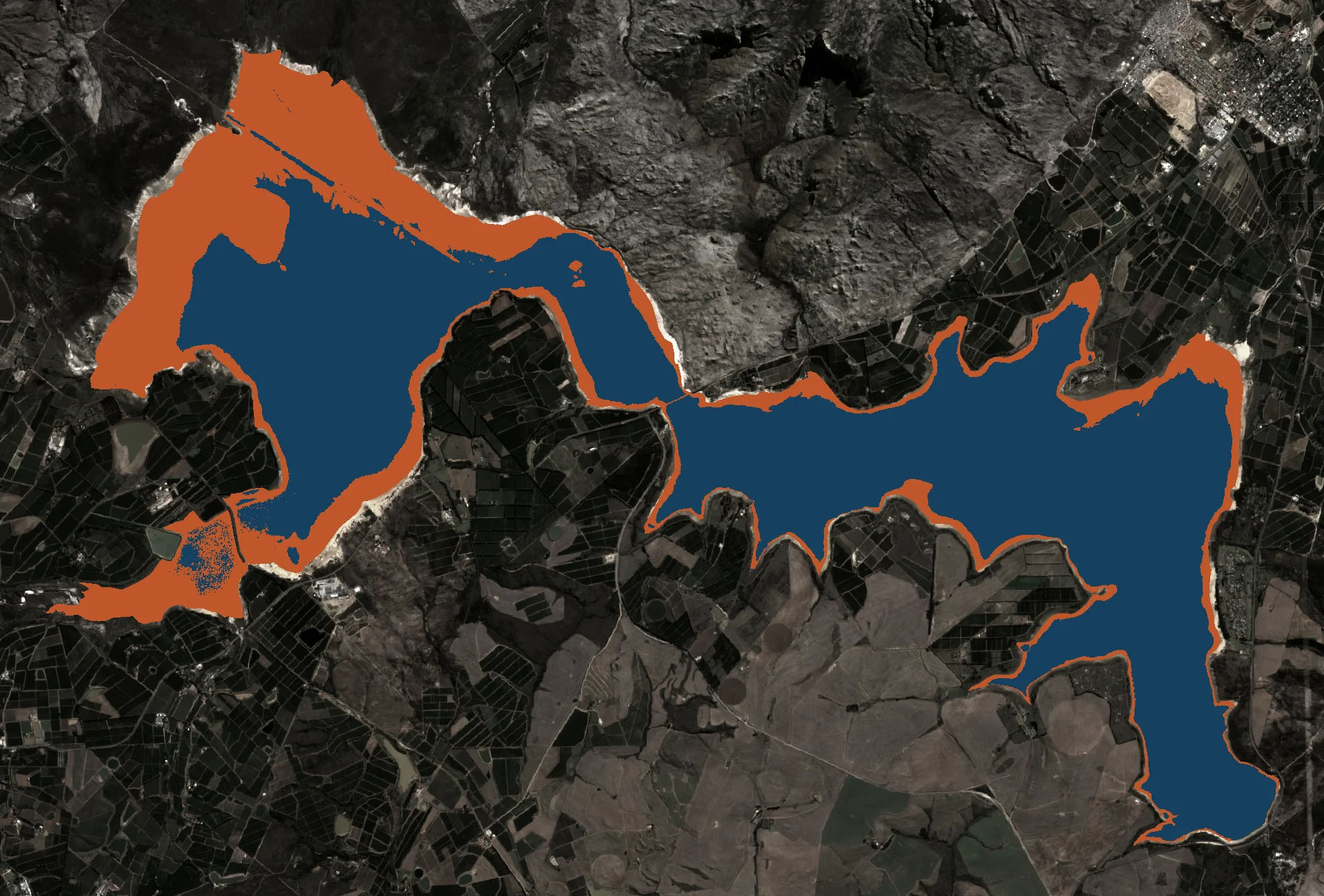
On 6 May 2026, the Blackheath Water Treatment Plant went offline for around four days of maintenance. The City asked every resident in Cape Town to cut back on use until the plant returned to service. Tens of thousands of taps ran dry. It was a planned disruption, announced in advance, and still caught a lot of people off-guard.
That happens because most of us know where water comes from in the abstract, rain, dams, taps, but not how it gets from one to the next. The route is longer and more fragile than it looks.
The six dams and how they connect
The Western Cape Water Supply System draws from six main dams in the Cape Fold Mountains to the east of the city: Theewaterskloof, Voelvlei, Berg River, Wemmershoek, Steenbras Upper and Steenbras Lower. As of 18 May 2026, the combined system sits at 69.4%, well above where it was this time last year (58.8%).
Theewaterskloof is the anchor. It holds around 480 million cubic metres, roughly 41% of total system capacity. Water from Theewaterskloof travels via the Riviersonderend–Berg River tunnel system through the mountains to Kleinplaas Dam, from where it reaches the Faure and Blackheath water treatment plants, which together feed much of the southern, eastern and northern metro. The other dams supply their own treatment works by separate pipelines: Wemmershoek feeds the Paarl area and parts of the northern suburbs; Voelvlei and Berg River supply treatment works in the broader Huguenot tunnel corridor; Steenbras Upper and Lower supply the southern suburbs and False Bay coast.
The six dams are interconnected by tunnels and pump stations, so water can be moved between basins in a drought. That flexibility kept the system alive in 2017 and 2018 when Theewaterskloof dropped to critically low levels — the full story of those years is in the Cape Town drought case study.
From treatment plant to your tap
Raw water from the dams is not drinkable. It goes first to one of the City’s water treatment works, where it is filtered, dosed with chlorine and other agents, and tested before entering the distribution network.
Cape Town has twelve main water treatment works. After treatment, water travels to a network of service reservoirs, high-level tanks and pump stations scattered across the city. From there, a reticulation network of roughly 20,000 kilometres of pipelines delivers it to over 650,000 metered connections. That network crosses mountains, runs under motorways and connects neighbourhoods from Khayelitsha in the east to Camps Bay on the Atlantic seaboard, at very different pressures and elevations.
Pressure management is not just a technical detail. The City deliberately reduces network pressure at night, which slows leaks and reduces pipe bursts. The trade-off is that properties at the end of long low-pressure lines, often in poorer parts of the city, can experience low flow or no flow during peak demand periods, even when there is no official disruption.
Why cape town water supply disruptions happen
Most cape town water supply disruptions fall into one of four categories.
Planned maintenance is the most common. Treatment plants need to be taken offline periodically for electrical repairs, valve replacements and upgrades. When a major plant like Blackheath, which processes bulk supply for large parts of the metro, goes offline, the downstream reservoirs drain faster than they refill. The City schedules these shutdowns in advance and publishes alerts, but the window can still run 48 to 96 hours.
Pipe bursts and valve failures are unplanned. The City’s network includes aging cast-iron mains that date back decades. A burst in a major feeder main can cut supply to an entire suburb within minutes. Leak detection teams walk up to 30 kilometres a day identifying failures before they escalate; the City currently loses around one-fifth of treated water to leaks and unaccounted-for use, a figure that costs the system more than any other single factor.
Electrical faults and load-shedding affect pump stations that lift water uphill. Cape Town’s topography is unforgiving: several neighbourhoods on the slopes of the Helderberg, the Boland and the southern peninsula depend on pump stations to maintain pressure. When a pump station loses power, water runs downhill and doesn’t come back until the pump restarts.
High demand during heat events can drain distribution reservoirs faster than treatment works can refill them. In summer, the City’s service reservoirs are designed to buffer several hours of peak demand. A prolonged heatwave compresses that buffer. Areas at the end of long supply lines, including parts of Mitchell’s Plain and some informal settlements in the northern suburbs, feel this first.
What the City publishes, and where to find it
The City of Cape Town publishes planned disruption alerts through its official service alert channels. The most reliable way to follow them is @CityofCTAlerts on X, which posts suburb-level notices before scheduled shutdowns and updates on burst mains as they are repaired.
For emergencies, the Water and Sanitation fault reporting line is 0860 103 089, available 24 hours. The City asks residents to report burst pipes through that number as well. A burst reported quickly gets fixed faster and wastes less water.
The City’s disruption notices typically specify the affected suburb and street, the reason, the expected start and end time, and advice on whether to store water in advance. Not every disruption affects every property in a listed suburb. Pressure in a neighbourhood can vary significantly by street and elevation.
What cape town water supply disruptions reveal about inequality
Planned shutdowns look the same on a map, but they land differently depending on where you live.
Households in Constantia, Hout Bay and Bishopscourt typically have garden tanks or home storage that tide them through a day-long outage. Many residents in Khayelitsha, Gugulethu and Delft have no storage at all. When the Blackheath plant went offline in early May 2026, the City asked residents across the metro to reduce consumption, but the burden of disruption falls hardest on households that already have the least.
About 70% of the city’s water is used by households. Within that, a small fraction of high-volume consumers, mostly in wealthier suburbs, accounts for a disproportionate share. The per-person consumption figure for the whole city was 149 litres a day as of mid-May 2026. The real distribution is far from even.
How to prepare for an outage
The standard advice from the City is to keep at least 30 litres of drinking water stored in clean, sealed containers, enough for a household of four for about two days. That covers drinking, cooking and basic hygiene. It will not cover flushing toilets or showering.
A few practical notes. When supply returns after a pipe repair, water sometimes runs milky or discoloured for a few minutes. That is air trapped in the system, not contamination. Run your tap for about a minute before using the water. If discolouration persists for longer than ten minutes, report it.
Airtight containers matter. Water stored in open buckets becomes a breeding ground for mosquitoes within 48 to 72 hours. Use covered containers, and turn over your stored supply every few days if a disruption does not arrive.
If you are on a home pressure pump or live in a building with a roof tank, a broader mains outage may still leave you with supply for several hours after the neighbourhood has lost pressure. Know which category your property falls into before an outage, not during it.
Watching the system in real time
The combined dam level, updated weekly from Department of Water and Sanitation data, tells you whether the source side of the system is under pressure. When storage falls below 50%, the City typically tightens maintenance scheduling and asks residents to cut back. At 69.4%, the dams are in reasonable shape for mid-autumn.
What the dam level does not tell you is whether a treatment plant is offline or a main has burst in your street. That is the operational layer, and it changes daily. Following @CityofCTAlerts is the quickest way to catch an alert before it becomes a dry tap.
Cape town water supply disruptions will keep happening. The infrastructure is old in parts, the demand is high, and the network stretches across one of the most topographically varied cities in the country. The useful question is not whether your water will be interrupted but how quickly you will know, and how ready you will be when it is.