Cape Town water restrictions are a formal legal tool the City uses when dam storage drops low enough to threaten supply — and the 2017-2018 crisis pushed them to their tightest level ever recorded: 50 litres per person per day.
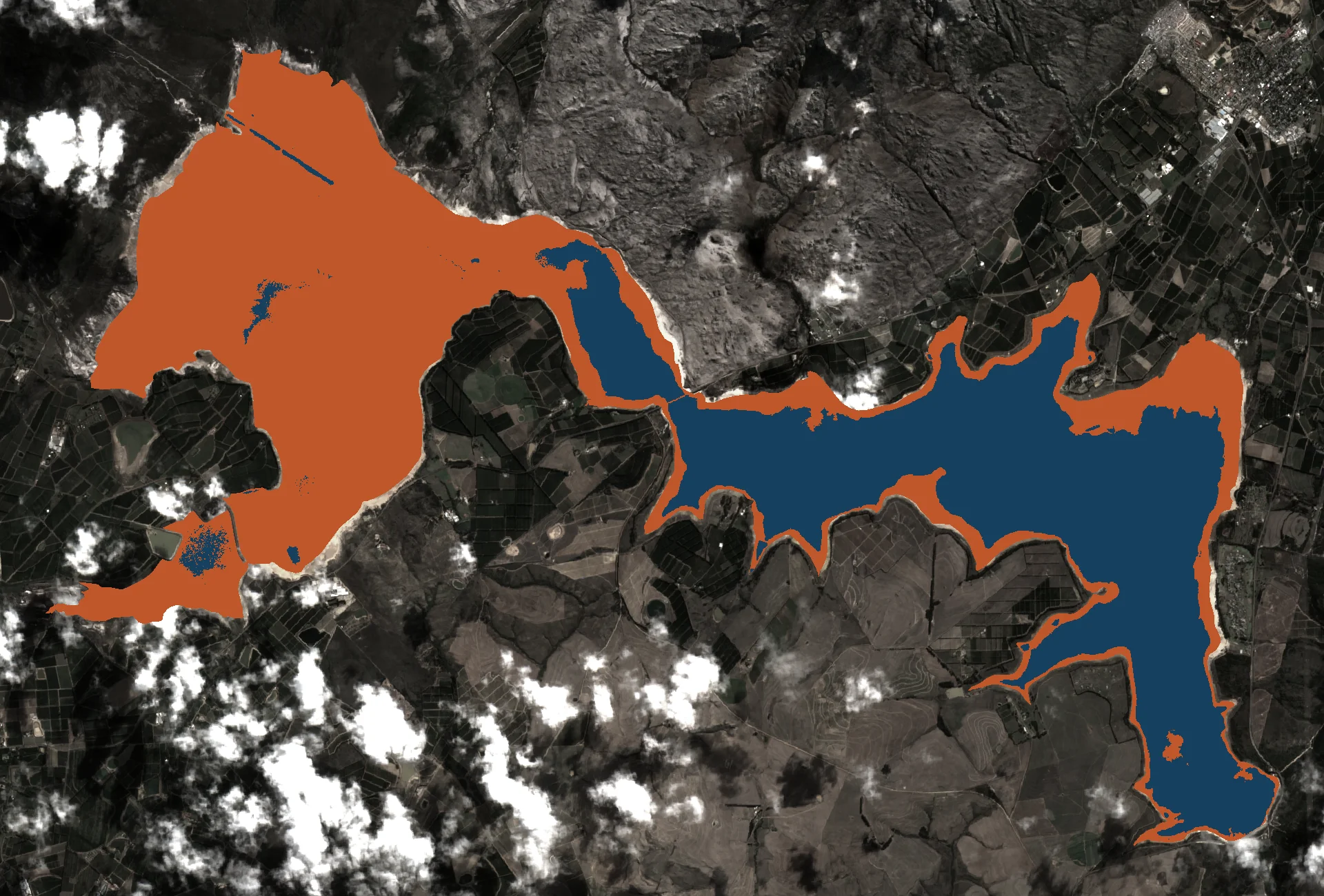
In November 2016, Cape Town moved to Level 3 water restrictions for the first time since the post-apartheid era. Households were told to keep use under 87 litres per person per day. Most people shrugged and kept filling their pools.
Fifteen months later, the limit was 50 litres. The City was counting days to something called Day Zero.
Understanding how Cape Town’s restriction system works, and where it sits right now, is easier than it sounds. There are seven levels, a set of permanent by-laws that never switch off, and a straightforward trigger: combined dam storage in the Western Cape Water Supply System.
Are there water restrictions in Cape Town right now?
As of July 2026, there are no extra water restrictions in force. The City lifted its Early Drought Caution in late May after an extreme storm raised the combined system by roughly 20 percentage points in a week. Dams stood at 74.9% on 29 June 2026, with the system tracking slightly above the same date last year.
Permanent water by-laws still apply, as they do at all times regardless of restriction level. Under those rules you cannot hose down hard surfaces, leave taps running unattended, or water a garden between 10am and 4pm. Greywater, from baths, showers and washing machines, is explicitly permitted for garden irrigation.
A system near 80% by the end of October gives the 2026-27 summer a comfortable buffer; anything well short of that puts restrictions back on the table. One rare storm does not make a wet winter season, and the current recovery rests on a single event rather than a pattern of good rain.
How the restriction levels work
Cape Town operates a numbered restriction system, documented during the 2015-2018 crisis, that runs from Level 1 through Level 6B. Each level tightens the daily per-person limit and adds bans on discretionary uses.
The permanent by-laws sit below Level 1 and apply all the time, in good years and bad. Above that, the levels escalate roughly as follows.
Levels 1 to 3B work through savings targets and outdoor-use rules rather than per-person litre limits. Level 1 asks the city to cut roughly 10 percent, with garden watering limited to set days and hours. Level 2 pushes the target to about 20 percent and tightens hosepipe and pool rules. Levels 3 and 3B push it to 30 percent, ban most sprinkler use and restrict pool top-ups.
Per-person limits arrive at Level 4. Level 4 sets a daily guideline of 100 litres per person; Level 4B drops it to 87 litres, and the City publishes a public map showing high-use addresses.
Level 6B sets the limit at 50 litres per person per day, for everything: drinking, cooking, washing, toilet, all of it. This was the level declared on 1 February 2018, at the height of the Day Zero in Cape Town crisis.
There is also a theoretical Level 7, the point at which municipal taps would close and residents would collect 25 litres per day from emergency distribution points. That level was never declared.
What 50 litres actually means
Fifty litres is a quarter-bath worth of water for a full day’s use. It covers a ninety-second shower (roughly 10 litres), two litres of drinking water, hand washing, cooking and one toilet flush. That is all.
The comparison that lands: the average UK resident uses around 150 litres a day; the average American, closer to 300. Under Level 6B, Cape Town’s daily per-person limit was one-third of what Britons use without thinking about it.
The City cut overall daily consumption from about 1,200 megalitres a day at the February 2015 peak to roughly 500 ML by February 2018, a reduction of more than half. Theewaterskloof Dam’s capacity is 480 million cubic metres, the largest in the WCWSS, and it had fallen to around 10–15 percent of its capacity by early 2018. The dams bought enough time for the winter rains to arrive.
The 2017-2018 restriction timeline
The City of Cape Town first imposed formal restrictions in 2005, at Level 1, and lifted them as conditions improved. The drought that began in 2015 changed everything.
January 2016: Level 2 declared, with a roughly 20 percent savings target and tighter outdoor watering rules.
November 2016: Level 3. Rules tighten again as the second poor winter ends.
February 2017: Level 3B. The drought is deepening; restrictions tighten further.
May 2017: The drought is formally declared the worst in a century, with dam storage falling below 10 percent of usable capacity by the end of the dry season.
June 2017: Level 4. A per-person daily guideline of 100 litres arrives for the first time.
July 2017: Level 4B. The daily figure tightens to 87 litres. A public map goes live showing water use by property.
September 2017: Level 5. Outdoor and non-essential water use banned. The City publishes its Critical Water Shortages Disaster Plan, including the location of emergency collection points.
1 January 2018: Level 6. The 87-litre figure holds, a monthly household cap of 10.5 kilolitres arrives, and enforcement intensifies.
1 February 2018: Level 6B. The 50-litre limit. The countdown to Day Zero begins.
June 2018: Winter rain arrives. Day Zero is never declared. September 2018, with dams near 70%, restrictions begin easing. By 2020, the dams are full and restrictions are off.
The full Cape Town drought case study covers what drove the system to that edge.
Who felt the restrictions most
The 50-litre limit did not fall on the city equally.
In Constantia, Bishopscourt and Camps Bay, Level 6B was an adjustment, shorter showers, pool covers, brown lawns, buckets in the bath. Uncomfortable but manageable from a place of relative comfort.
In Khayelitsha, Mitchells Plain and Philippi, fifty litres was already close to the daily reality for many households before the crisis began. About half the city’s population lives in the townships and Cape Flats neighbourhoods east and southeast of the centre, and that half uses about 5 percent of the city’s water. The City of Cape Town designed emergency collection points on the assumption that half of demand would shift to communal taps, but for many residents in those areas, that was already how water arrived.
Most of the demand reduction that kept Day Zero at bay came from middle-class and wealthy suburbs. That is where most of the demand had always been.
What triggers restrictions now
The City monitors the combined storage of the six WCWSS dams weekly and publishes the figure every Thursday. The trigger thresholds are not fixed in advance. The City assesses the situation at each level and formally applies to the national Department of Water and Sanitation to gazette a change.
The alert zones work roughly like this: below about 50% storage heading into summer, the City considers Early Drought Caution; below 40%, Level 1 restrictions become likely; the lower the system goes into winter, the faster higher levels are reached. The 13.5% threshold, the Day Zero line, is the operational floor below which the network cannot reliably function.
Current consumption sits at 874 Ml per day, or around 149 litres per person per day. That is above the long-run 2018 minimum but well below the pre-drought peak. Watching the combined dam levels through July and August, the deepest winter months, is the simplest way to see where the system is tracking.
Cape Town has no restrictions today, for now. The question the system is always quietly asking is whether this winter will fill the dams enough to keep them that way.